Union Organizing

I was a labor organizer from 2014-2023, first in the Bay Area with SEIU’s Adjunct Action Campaign (later called Faculty Forward). I was part of an impressive organizing team that won five union elections ay Bay Area Colleges in one year. I stuck with three of the schools as a first-contract transition organizer, continuing to build out the new union structures while sitting at the negotiation tables. With faculty and students, we created campaigns that brought together adjunct faculty, food service workers, and activists in the movements for Black lives.
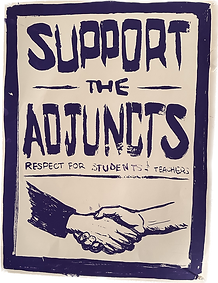
From 2017-2018, I was a field representative for public health workers at San Francisco General Hospital and workers in social service agencies serving residents in San Francisco’s Tenderloin neighborhood. I went back to higher ed as a field representative and campus organizer with the California Faculty Association, a union affiliated with AAUP, SEIU, and CTA. From 2018-2023, I represented faculty in the California State University System, the largest four-year public higher education system in the country.
Gender-Neutral Bathrooms on Campus
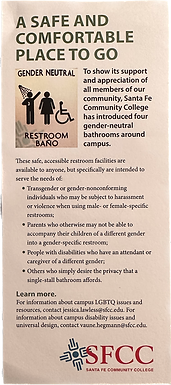
When I started teaching at Santa Fe Community College in Santa Fe, New Mexico in 2009, my partner came to campus for a Spanish class and didn’t have a place to pee. The only bathrooms were multi-stalls marked Women or Men. I saw an opportunity to do something when I was invited to lead a gender 101 professional development workshop for campus faculty and administrators. Giving my collegues an assignment I usually did with students, they realized they could use ADA money to upgrade bathrooms for trans folks and also for disabled community members. Importantly, I helped them understand single stall bathrooms supported needs of parents and other caretakers of young children, as well as women and other people who menstruate. The Director of Disability was on-board, as was the Chair of the President’s Diversity Committee. And the new college archetect was a gay man who wanted to be an ally to trans youth. I was invited to lead a committee made up of faculty, students, and staff where we successfully had several single-stall bathrooms added to an existing ADA construction project.
Home Alive
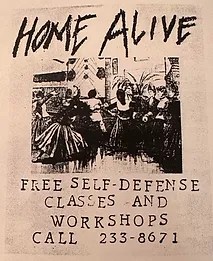
Home Alive was a feminist self-defense collective I co-founded in Seattle, Washington with eight other women. It was a response to the rape and murder of our friend, Mia Zapata, who was a beloved and inspired musician and artist. Home Alive provided affordable self-defense classes, through funds we raised from music and art shows. Famous and infamous artists, and artists unconcerned with being well-known, supported the organization through its 17-year run. Home Alive was part of the 1990s activism that informed intersectional feminisms, healing justices, and abolitionist feminisms through non-carceral responses to gendered violence.
Two documentaries tell some of this history, Rock, Rage and Self-Defense and The Gits. My memoir, Cultural Capital Doesn’t Pay the Rent, also examines Home Alive and desires for collective liberation.
Sister Serpents & Lilith’s Revenge
Sister Serpents was a feminist art collective in Chicago in the early 1990s at the same time Jesse Helms, and other evangelical Christians, led congressional attacks on the National Endowment for the Arts. They defunded public arts programs by going after queer/feminist/of-color artists.
As part of Sister Serpents, I was arrested for disrupting an anti-abortion event featuring Jerry Falwell. We were infamous for agitational street art, had a zine called MadWoman, and curated art exhibits inside and outside of galleries.

Lilith’s Revenge was feminist art collective I was part of in Seattle, Washington. Like Sister Serpents (and the Guerilla Girls, ACT UP, and Queer Nation), Lilith’s Revenge used art to fight back against Christion Nationlist culture wars.
My involvement in both collectives was immensely useful in developing the art organizing practices I brought into my teaching, union organizing, and general approach to most things I do.
Freshman Smoking Area
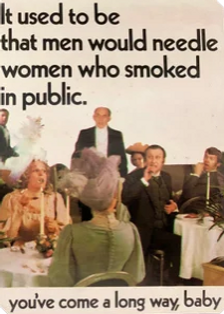
My first organizing effort was as a pissed-off, Marlboro-smoking 14-year-old. I was pissed because I received multiple detentions when I went to smoke at the sanctioned smoking area of my high school. It wasn’t a concern that I smoked, but rather a concern that I left the freshman campus without a pass. Several other young women were equally pissed about our movements being policed by security guards who used to work in state prisons. We were mad about the hypocrisy of not being able to smoke when older classmates could. We didn’t think of ourselves as activists or of what we were doing as organizing, Yet we eventually won a smoking area on the freshman campus.
It’s a bit absurd looking at this from today’s vantage point, and it’s a story that could only happen in 1980, a moment in time sandwiched between free love and free markets.
My first lessons in organizing taught me anyone can have a voice and anyone can challenge unfair treatment. I learned that a collective voice is more powerful than an individual voice and systemic change happens when those most impacted are leading the way. Change from the ground up allows for new possibilities those in power can’t imagine. I still tap into that 14-year-old bad ass when I need creatve solutions!
 Jessica Lawless